

A Case for Love (Actually)
What a deeply flawed Christmas movie still gets right

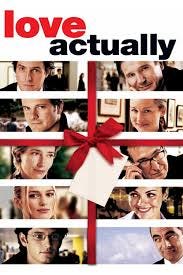
“Almost there,” I huffed to myself as I hauled two laundry baskets up the stairs and dumped them at the foot of my bed. I tossed a bone to the dog circling the sheets, grabbed the remote, started folding, and queued up my favorite Christmas movie: Love Actually.
Aside from the original Grinch cartoon (and some unauthorized purchases by my children), Love Actually is the only movie I’ve actually purchased and secured in my Prime Video Library—guaranteeing its annual holiday appearance, mercifully ad-free.
That night, my husband packed up a crossword puzzle and hauled the kids to swimming, and I knew I had a solid two hours to myself: time to feel wistful, nostalgic, and fully indulge in a critically unacclaimed movie from over 20 years ago.
Now.
Let’s be honest about this film.
Made in 2003, I first watched it when I flew a cheap €9 Ryanair flight from Rome to Ireland to visit my now-husband/then-boyfriend during our “let’s take a break but still fight and make up using expensive calling cards” European study-abroad era—so nostalgia is doing some heavy lifting here.
Not unlike us in our early relationship, there are…issues.
There are the relentless fat jokes and body commentary aimed at women, the obsession with “hotness,” and the aggressively uncharming Billy Bob Thornton performance that was intended to be a takedown of George W. Bush—the worst president we could possibly imagine at the time.
And the fashion?
So many low-rise jeans.
So much frosty lip gloss.
And still.
Still, something gets me.
Woven through the movie are small stories of very average people (and one Prime Minister) whose lives overlap and tangle—stories of love, loss, longing, and care. The film opens and closes in an airport, and gosh darnit, I’m tearing up again just typing this.
Ahem.
Back to the airport.
The narrator—an eternally charming Hugh Grant—asks us to notice that despite all the noise about how awful humans can be, if you watch an airport long enough you’ll see it:
Reunions.
Goodbyes.
Hugs.
Relief.
Grief.
Joy.
Evidence that love, actually, is all around.

After last week’s essay—where I wrote fiercely about what feels worth standing up to right now—I wanted to remind myself (and maybe you) of something quieter and steadier:
Refusal to cooperate with despair often starts with the smallest, most local act of love available to us.
Both things are true.
• There is real human suffering.
• There is an obligation to name cruelty and refuse to normalize it.
• And there are millions of daily opportunities to witness the very best of one another.
For me, Christmas widens the aperture. It softens my focus just enough to let magic, love, and joy back in. There’s something about ordinary moments set against sparkly lights—the blue-white glow of snow in the darkest days of the year.
The rituals.
The effort it takes to make the magic.
The smallest faces lit up with excitement.
I tape our Christmas cards to a big door in the living room, and as December goes on, it becomes harder to miss: our lives are crowded with love. There is much to be grateful for.
My hope with Less Thinking, More Living is that you come to see love not as a vague feeling, but as something tethered to intentional action—and that there are many ways to make a life worth living.
And also, just as importantly, that especially at Christmas…
Love actually is all around.
This was such a great point of view. And I still adore that movie no matter how many people try to take it down. AND I wanted to tell you that your episode on Dear Nina: Conversations About Friendship made into my top 5. I'm putting a clip in next week's episode! :) Keep an eye out for the 2025 wrap up ep.